

With so many skincare devices on the market, picking the right one can feel overwhelming. A facial steamer that works wonders for dry skin might aggravate oily, acne-prone complexions if used too often. The secret is matching every tool to your unique skin type and concerns. In this guide, we walk you through exactly how to identify your skin type, which beauty tools pair best with each type, and how to build a routine that delivers real, visible results at home. Whether you are new to beauty tech or leveling up your regimen, you will leave with a clear action plan.
Step 1: Identify Your Skin Type
Before you shop for any device, you need to know what your skin actually needs. A skin type is the baseline classification of how your skin produces oil, retains moisture, and reacts to products. The four primary types are oily, dry, combination, and sensitive.
The Bare-Face Test
Wash your face with a gentle cleanser, pat dry, and wait 30 minutes without applying anything. If your T-zone is shiny while cheeks feel tight, you likely have combination skin. An all-over shine points to oily skin, and tightness everywhere suggests dry skin. Redness or stinging indicates sensitivity.
Why It Matters for Tool Selection
Each skin type responds differently to exfoliation intensity, heat, and suction. Using a high-powered dermabrasion device on sensitive skin, for example, can cause micro-tears and inflammation. Taking Fancii's Skincare Tool Quiz is a quick way to get a personalized starting point.
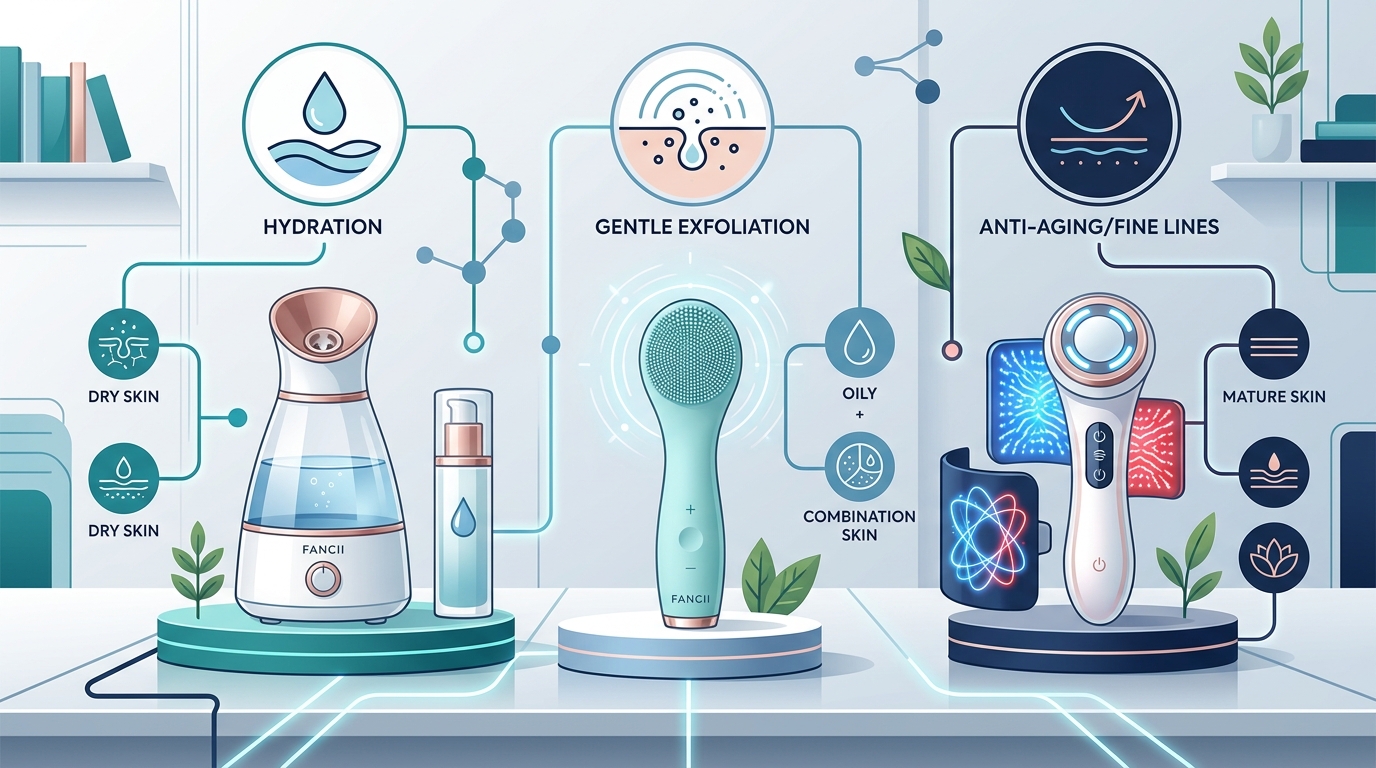
Step 2: Understand the Main Beauty Tool Categories
A beauty tool is any device designed to enhance your skincare routine beyond what hands and cotton pads can achieve. Here are the core categories worth knowing.
Cleansing Brushes
A sonic cleansing brush is a handheld device that uses rapid oscillations to dislodge dirt, oil, and makeup from pores. According to Ulta Beauty's skincare device guide, cleansing brushes can be used two to three times per week for most skin types. Fancii's sonic cleansing brush collection includes models with adjustable speed settings so you can start gentle and increase intensity over time.
Facial Steamers
A facial steamer is a device that emits a fine mist of warm vapor to open pores, boost hydration, and prep skin for serums. The Rivo Nano Ionic Facial Steamer from Fancii uses nano-ionic technology to produce ultra-fine steam particles that penetrate more deeply than traditional steamers.
Dermabrasion and Pore Devices
Microdermabrasion tools use gentle suction combined with exfoliation tips to remove dead skin cells and unclog pores. These are best suited for those targeting blackheads, texture, or dullness.
Step 3: Match Tools to Your Skin Type
Now that you understand the tool landscape, here is how to pair devices with your skin type for the best results.
Oily and Acne-Prone Skin
Prioritize cleansing brushes and pore-clearing devices. A sonic brush removes excess sebum without harsh scrubbing. Fancii's Clara microdermabrasion device targets blackheads and congestion. Limit steaming to once per week to avoid overstimulating oil glands.
Dry and Dehydrated Skin
Facial steamers are your best friend. Steaming one to two times per week helps your moisturizers and serums absorb more effectively. Follow up with a gentle facial roller to boost circulation. Avoid aggressive exfoliation tools that strip moisture.
Sensitive and Reactive Skin
Look for devices with adjustable intensity settings. Start every new tool on the lowest speed and limit use to once per week. As Fancii recommends on their skin quiz results page, sensitive skin users should begin Clara treatments once every two weeks, then adjust based on how their skin responds.
Skin Type vs. Beauty Tool Comparison Table
| Skin Type | Best Tools | Frequency | What to Avoid |
|---|---|---|---|
| Oily / Acne-Prone | Sonic cleansing brush, pore vacuum, LED light therapy | Brush 2-3x/week; pore device 1x/week | Heavy steamers used daily |
| Dry / Dehydrated | Facial steamer, facial roller, hydrating masks | Steamer 1-2x/week; roller daily | Harsh exfoliation tools |
| Combination | Adjustable cleansing brush, targeted steaming, gentle dermabrasion | Brush 2x/week; steamer 1x/week | One-setting-only devices |
| Sensitive / Reactive | Low-speed cleansing brush, cool facial roller, nano steamer on low | All tools 1x/week max to start | High-suction pore devices, rough exfoliators |
| Mature / Aging | Microcurrent device, LED therapy, facial roller | Microcurrent 3-5x/week; LED per device guide | Over-exfoliation, aggressive suction |
According to dermatologist Dr. Dendy Engelman in WWD, regularly incorporating tools into your routine can help prevent signs of aging and boost overall skin health over time.
Step 4: Build a Tool-Based Skincare Routine
The best approach is layering your tools into your existing routine rather than replacing it. Skincare tools enhance your products but do not substitute for cleansers, serums, or SPF.
A solid evening routine might look like this: start with a sonic cleansing brush to deep-clean, follow with a facial steamer session to open pores, apply your serum, then use a facial roller to press it in and de-puff. Browse the full Fancii beauty tools collection to find devices that fit each step.
When introducing new tools, always start on the lowest setting. Fancii recommends beginning the Rivo steamer at once per week, using the Remi facial roller daily, and spacing Clara dermabrasion sessions out to once per week or less for sensitive skin.
Common Mistakes to Avoid
Over-use is the number one pitfall. More is not better when it comes to exfoliation and suction devices. Using a dermabrasion tool every day can damage your skin barrier and cause redness or breakouts.
Skipping the patch test is another frequent error. Even gentle tools can cause reactions on certain skin types. Always test a new device on a small area of your jawline for 24 hours before full use.
Finally, ignoring tool hygiene leads to bacterial buildup. Clean brush heads and steamer tanks after every use. Replace brush heads per the manufacturer's schedule to maintain effectiveness.
Key Takeaways
- Always identify your skin type before investing in any beauty tool.
- Oily skin benefits most from cleansing brushes and pore devices; dry skin thrives with steamers and rollers.
- Sensitive skin requires adjustable-intensity tools used at low settings and reduced frequency.
- Layer tools into your existing skincare routine rather than replacing serums and moisturizers.
- Start every new device on the lowest setting and increase gradually based on your skin's response.
- Clean your tools after every session to prevent bacteria buildup and maintain results.
- Take a personalized skincare quiz to shortcut the selection process.
Frequently Asked Questions
How do I know which beauty tool is right for my skin type?
Start by identifying whether your skin is oily, dry, combination, or sensitive. Then match each type to the recommended tool category. Oily skin pairs well with sonic cleansing brushes, while dry skin benefits from facial steamers. Taking a quick online quiz, like the one at Fancii's Skincare Tool Quiz, gives you tailored recommendations in minutes.
Can I use beauty tools every day?
It depends on the tool. Facial rollers can generally be used daily, but cleansing brushes should be limited to two to three times per week, and dermabrasion devices to once per week. Over-use can irritate the skin barrier.
Are beauty tools safe for sensitive skin?
Yes, many tools work well for sensitive skin when used correctly. Choose devices with adjustable speed or intensity settings and start on the lowest level. Fancii recommends sensitive skin users begin Clara treatments once every two weeks.
Do facial steamers really help skincare products absorb better?
Yes. Steaming opens pores and softens the skin surface, which allows serums and moisturizers to penetrate more deeply. Using a nano ionic steamer like the Rivo one to two times per week before applying your serums can noticeably improve product efficacy.
What is the difference between a cleansing brush and a dermabrasion tool?
A cleansing brush uses sonic vibrations to remove surface impurities and makeup. A dermabrasion tool uses suction and exfoliation tips to physically remove dead skin cells from deeper layers. Cleansing brushes are gentler and suited for more frequent use.
How often should I replace brush heads and attachments?
Most manufacturers recommend replacing silicone or bristle brush heads every three to six months, depending on frequency of use. Worn heads lose effectiveness and can harbor bacteria even after cleaning.
Should I consult a dermatologist before using beauty tools?
If you have active skin conditions like rosacea, eczema, or cystic acne, consulting a dermatologist first is strongly recommended. For general skin types without active conditions, at-home tools with adjustable settings are considered safe by most skincare professionals.
Find Your Perfect Tool
Choosing the right beauty tool does not have to be complicated. Start by knowing your skin type, pick the tool category that matches, and ease into your routine on the lowest settings. Ready to find your match? Take the Fancii Skincare Tool Quiz for a personalized recommendation, or explore the full skincare tools collection and read the Fancii Beauty Blog for more expert tips.