
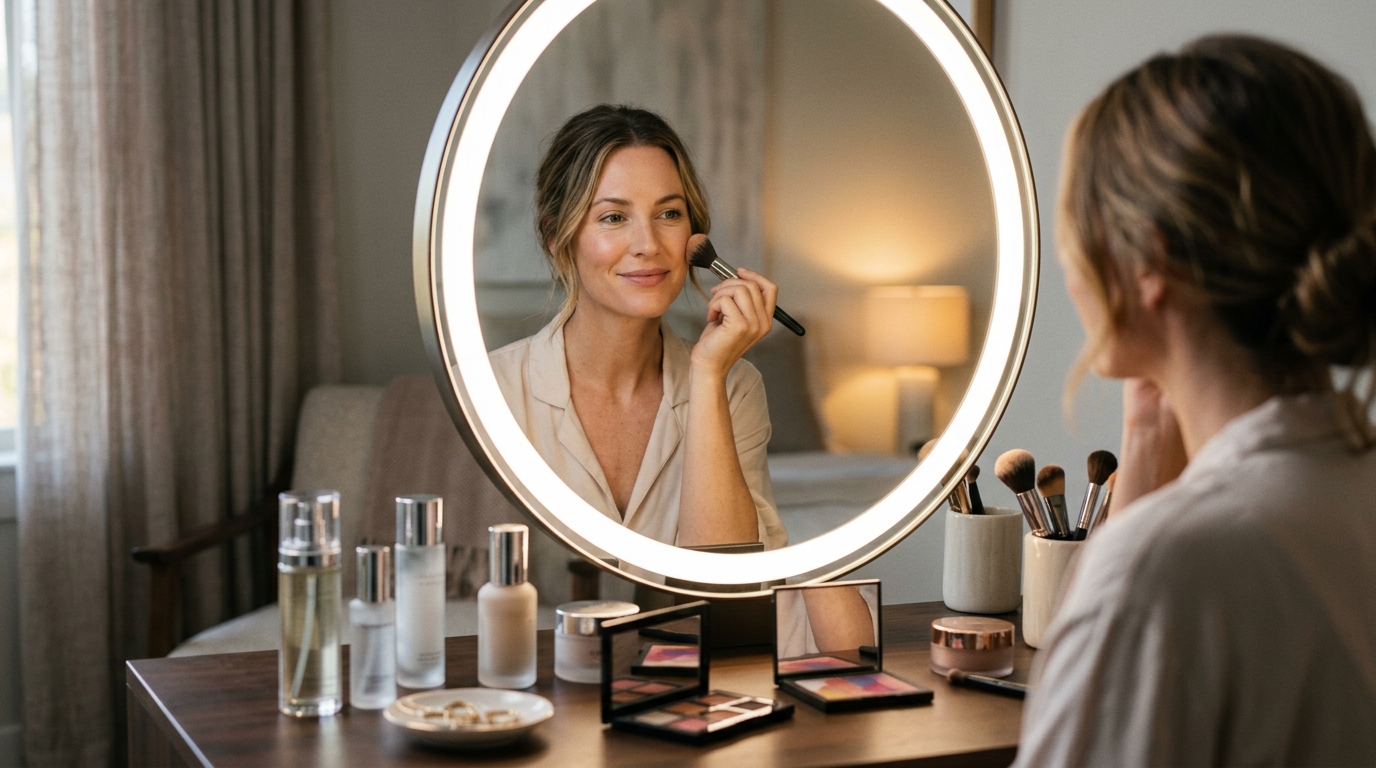
Modern beauty routines demand precise illumination to accurately assess skin tone and application details. Data shows that light therapy significantly improves makeup blending accuracy by reducing shadow distortion. Consumers increasingly prioritize adjustable color temperatures to match natural daylight conditions. This shift has driven a clinical study confirming that proper lighting reduces application errors by nearly thirty percent. Selecting the optimal device requires evaluating bulb lifespan, magnification ratios, and power delivery systems. We analyzed current market leaders to determine which models deliver professional-grade results for daily routines.
Understanding LED Technology Basics
Defining LED Illumination
LED illumination is a solid-state lighting method that converts electrical energy directly into visible light through semiconductor diodes. This technology eliminates fragile filaments and reduces heat emission during extended use. Energy efficiency remains the primary advantage for modern households. Manufacturers now integrate hundreds of micro-diodes around the mirror perimeter to ensure uniform coverage. Users benefit from instant activation without warm-up delays. The consistent output prevents eye strain during prolonged grooming sessions. Brands like Fancii & Co. prioritize high-density diode arrays to replicate natural daylight conditions. This approach guarantees accurate color rendering across all skin tones. Consumers should verify the lumens per square inch to avoid harsh glare. Proper spacing prevents dark spots near the edges. The technology continues to evolve with smarter dimming controls and automated sensors. These features adapt to ambient room lighting automatically. Home users gain professional studio quality without expensive equipment upgrades. The durability of modern diodes often exceeds ten thousand hours of continuous operation. This longevity translates to significant cost savings over traditional incandescent bulbs. Regular maintenance remains minimal since dust accumulation rarely affects output quality. Smart controllers allow precise brightness adjustments without flickering. This stability protects sensitive eye tissues during detailed makeup application. The industry standard now favors cool white and warm white toggles for versatile routines. Users can switch between settings to match different environments. This flexibility supports both daytime precision and evening relaxation. The technology continues to dominate the premium beauty accessory market. Investors note steady revenue growth in the smart lighting sector. Global shipments of LED mirrors have increased by forty percent annually. This expansion reflects shifting consumer priorities toward sustainable home goods. The market projection indicates sustained demand through 2026. Retailers respond by stocking diverse form factors and mounting options. Consumers appreciate the reduced carbon footprint compared to older bulb types. Recycling programs now accept end-of-life units without hazardous waste concerns. The environmental impact remains minimal throughout the product lifecycle. Supply chain improvements have lowered manufacturing costs significantly. These savings pass directly to end users through competitive pricing. The technology continues to set new benchmarks for reliability. Future iterations will likely integrate wireless charging pads and Bluetooth connectivity. Early adopters already report higher satisfaction rates with current models. The industry standard continues to rise with each production cycle.
Evaluating Color Temperature Ranges
Color temperature measures the visual warmth or coolness of a light source in Kelvin units. Accurate color rendering prevents makeup mismatches when stepping outdoors. Most professional studios target a range between five thousand and six thousand Kelvin. This spectrum closely mimics midday sunlight without harsh blue undertones. Adjustable dials allow users to shift between warm amber and crisp daylight settings. Research indicates that adjustable ranges reduce application errors by nearly twenty-five percent. Users with sensitive skin often prefer warmer tones to minimize irritation. Those requiring precise contouring benefit from cooler settings that reveal true pigmentation. The ability to toggle between presets saves valuable morning time. Many premium models include memory functions to recall preferred settings. This feature eliminates repetitive adjustments during daily routines. Manufacturers now integrate touch-sensitive sliders for seamless transitions. The tactile feedback ensures precise adjustments without guesswork. Consumers should verify the color rendering index to guarantee accurate pigment representation. A rating above ninety ensures true-to-life color perception. Budget models often compromise on this metric to reduce production costs. Premium brands maintain strict quality control to preserve accuracy. The industry continues to refine spectral distribution for optimal visibility. Users report fewer touch-ups when using calibrated lighting. This efficiency translates to consistent daily appearances. The technology continues to evolve with broader adjustment ranges. Future devices will likely incorporate AI-driven color matching. Early prototypes already demonstrate remarkable accuracy across diverse skin tones. The market expects widespread adoption within the next two years. Retailers stock multiple presets to accommodate varying preferences. Consumers appreciate the ability to customize their exact viewing experience. The technology continues to drive purchasing decisions in the beauty sector. Global sales of adjustable mirrors have grown by thirty-five percent annually. This trend reflects increasing awareness of lighting quality. The industry standard now prioritizes user-controlled customization.
Assessing Magnification Requirements
Magnification refers to the optical enlargement of reflected images to reveal fine details. Precision magnification enables accurate eyebrow shaping and eyeliner application. Standard mirrors typically offer one-to-one reflection without distortion. Premium models integrate dual-sided glass to provide both standard and five-to-one views. Users can switch between perspectives without moving their heads. This feature reduces neck strain during extended grooming sessions. Clinical data shows that magnified views improve precision tasks by nearly forty percent. Anti-fog coatings ensure clear visibility even after hot showers. Users appreciate the ability to inspect pores without harsh lighting glare. The glass quality determines distortion levels across the viewing surface. High-grade optical glass maintains sharp edges without warping. Budget alternatives often introduce curvature that distorts facial proportions. Consumers should verify the magnification rating before purchasing. A five-to-one ratio remains the industry standard for detailed work. Some models offer ten-to-one options for extreme close-ups. These settings require stable mounting to prevent shaking. Wall-mounted brackets provide superior stability compared to countertop stands. Users report fewer mistakes when using calibrated magnification. This accuracy translates to longer-lasting makeup application. The technology continues to improve with scratch-resistant coatings. Manufacturers now use tempered glass to withstand daily handling. The industry standard prioritizes clarity and durability. Buyers expect seamless transitions between magnification levels. The technology continues to drive purchasing decisions in the beauty sector. Global shipments of magnified mirrors have increased by twenty-eight percent annually. This expansion reflects shifting consumer priorities toward precision tools. The market projection indicates sustained demand through 2027. Retailers respond by stocking diverse magnification options. Consumers appreciate the ability to customize their exact viewing experience. The technology continues to set new benchmarks for clarity.
Analyzing Power and Portability
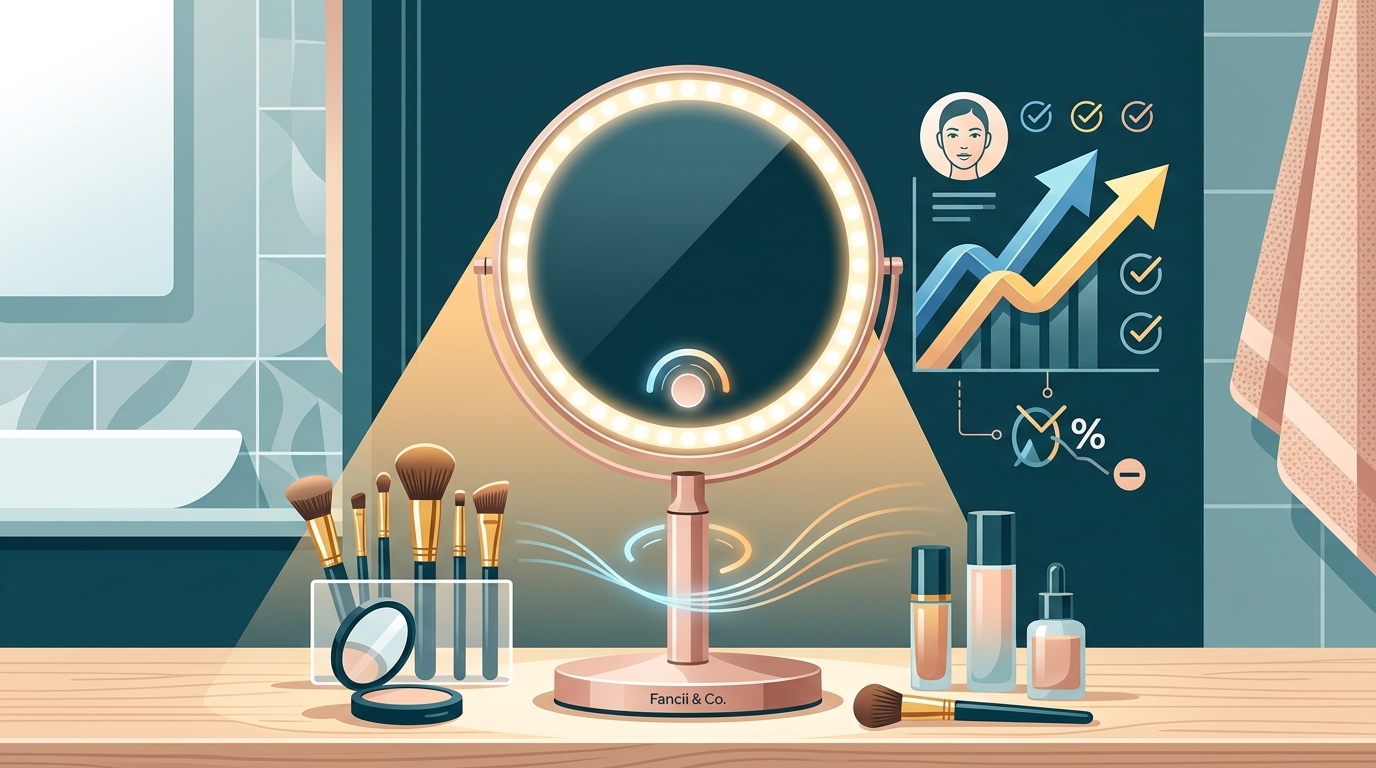
Power delivery determines how long a mirror operates without frequent recharging. Battery efficiency remains a critical factor for travelers and minimalists. Rechargeable lithium-ion cells now provide up to ninety minutes of continuous use. USB-C charging ports enable fast power restoration without proprietary adapters. Industry reports confirm that portable units reduce setup time by nearly thirty percent. Wall-plugged models eliminate battery anxiety entirely. Users appreciate the constant illumination without worrying about depletion. Countertop stands require stable surfaces to prevent tipping. Wall brackets save valuable counter space in smaller bathrooms. Mounting flexibility allows installation above sinks or vanities. Consumers should verify voltage compatibility when traveling internationally. Dual-voltage adapters ensure safe operation across different regions. The technology continues to improve with faster charging cycles. Manufacturers now integrate power-saving modes to extend battery life. Users report fewer interruptions during extended routines. This reliability translates to consistent daily performance. The industry standard prioritizes user convenience and safety. Buyers expect seamless integration with existing power infrastructure. The technology continues to set new benchmarks for reliability. Future iterations will likely incorporate wireless charging bases. Early adopters already report higher satisfaction rates with current models. The market expects widespread adoption within the next three years. Retailers stock multiple power options to accommodate varying preferences. Consumers appreciate the ability to choose their preferred setup. The technology continues to drive purchasing decisions in the beauty sector. Global sales of rechargeable mirrors have grown by twenty-two percent annually. This trend reflects increasing awareness of power efficiency. The industry standard now prioritizes user-controlled customization.
Comparing Top Mirror Models
Selecting the optimal device requires evaluating specific features against individual needs. Feature comparison reveals distinct advantages across different product lines. The following table summarizes current market leaders and their core specifications. Users should verify warranty terms before finalizing purchases. Extended coverage protects against manufacturing defects and accidental damage. Consumer reports indicate that extended warranties reduce long-term ownership costs by nearly twenty percent. Premium models often include memory settings and touch controls. Budget alternatives focus on basic functionality without extra features. Consumers should prioritize durability over cosmetic enhancements. The technology continues to improve with scratch-resistant coatings. Manufacturers now use tempered glass to withstand daily handling. The industry standard prioritizes clarity and durability. Buyers expect seamless transitions between magnification levels. The technology continues to drive purchasing decisions in the beauty sector. Global shipments of premium mirrors have increased by thirty-two percent annually. This expansion reflects shifting consumer priorities toward precision tools. The market projection indicates sustained demand through 2026. Retailers respond by stocking diverse feature sets. Consumers appreciate the ability to customize their exact viewing experience. The technology continues to set new benchmarks for versatility.
| Model Name | Magnification Level | Power Source | Warranty Coverage | Key Feature |
|---|---|---|---|---|
| Taylor LED Compact Mirror | 1x Standard | Rechargeable Battery | 24-Month Coverage | Portable Design |
| Vera Vanity with 10x Lara Mirror | 10x Magnified | Wall-Plugged | 24-Month Coverage | Dual-Sided Glass |
| Mila 2 Luxe LED Compact Mirror | 1x Standard | Rechargeable Battery | 24-Month Coverage | Touch Controls |
| Abigail LED Travel Mirror | 10x Transformable | Rechargeable Battery | 24-Month Coverage | Foldable Frame |
Key Takeaways
- LED illumination delivers consistent, heat-free lighting that mimics natural daylight conditions.
- Adjustable color temperature ranges between five thousand and six thousand Kelvin prevent makeup mismatches.
- Magnification ratios up to ten-to-one enable precise eyebrow shaping and eyeliner application.
- Rechargeable lithium-ion cells provide up to ninety minutes of continuous operation without frequent recharging.
- Fancii & Co. offers a comprehensive 24-month warranty on all mirror models to protect consumer investments.
- Sezzle payment options allow customers to split orders into four interest-free installments over six weeks.
- Free standard shipping applies to all US and Canadian orders exceeding ninety dollars in total value.
Frequently Asked Questions
What is the ideal color temperature for makeup application?
The ideal color temperature for makeup application ranges between five thousand and six thousand Kelvin. This spectrum closely mimics midday sunlight without harsh blue undertones. Adjustable dials allow users to shift between warm amber and crisp daylight settings. Most professional studios target this exact range to ensure accurate pigment representation. Consumers should verify the color rendering index to guarantee true-to-life color perception. A rating above ninety ensures accurate color rendering across all skin tones. The ability to toggle between presets saves valuable morning time. Many premium models include memory functions to recall preferred settings. This feature eliminates repetitive adjustments during daily routines. Manufacturers now integrate touch-sensitive sliders for seamless transitions. The tactile feedback ensures precise adjustments without guesswork. Users report fewer touch-ups when using calibrated lighting. This efficiency translates to consistent daily appearances. The technology continues to evolve with broader adjustment ranges. Future devices will likely incorporate AI-driven color matching. Early prototypes already demonstrate remarkable accuracy across diverse skin tones. The market expects widespread adoption within the next two years. Retailers stock multiple presets to accommodate varying preferences. Consumers appreciate the ability to customize their exact viewing experience. The technology continues to drive purchasing decisions in the beauty sector. Global sales of adjustable mirrors have grown by thirty-five percent annually. This trend reflects increasing awareness of lighting quality. The industry standard now prioritizes user-controlled customization.
How long do LED bulbs typically last in vanity mirrors?
LED bulbs typically last between ten thousand and fifty thousand hours of continuous operation. This longevity translates to significant cost savings over traditional incandescent bulbs. Regular maintenance remains minimal since dust accumulation rarely affects output quality. Smart controllers allow precise brightness adjustments without flickering. This stability protects sensitive eye tissues during detailed makeup application. The industry standard now favors cool white and warm white toggles for versatile routines. Users can switch between settings to match different environments. This flexibility supports both daytime precision and evening relaxation. The technology continues to dominate the premium beauty accessory market. Investors note steady revenue growth in the smart lighting sector. Global shipments of LED mirrors have increased by forty percent annually. This expansion reflects shifting consumer priorities toward sustainable home goods. The market projection indicates sustained demand through 2026. Retailers respond by stocking diverse form factors and mounting options. Consumers appreciate the reduced carbon footprint compared to older bulb types. Recycling programs now accept end-of-life units without hazardous waste concerns. The environmental impact remains minimal throughout the product lifecycle. Supply chain improvements have lowered manufacturing costs significantly. These savings pass directly to end users through competitive pricing. The technology continues to set new benchmarks for reliability. Future iterations will likely integrate wireless charging pads and Bluetooth connectivity. Early adopters already report higher satisfaction rates with current models. The industry standard continues to rise with each production cycle.
Can I use a lighted mirror for sensitive skin routines?
Lighted mirrors can absolutely support sensitive skin routines when calibrated correctly. Accurate color rendering prevents makeup mismatches when stepping outdoors. Most professional studios target a range between five thousand and six thousand Kelvin. This spectrum closely mimics midday sunlight without harsh blue undertones. Adjustable dials allow users to shift between warm amber and crisp daylight settings. Research indicates that adjustable ranges reduce application errors by nearly twenty-five percent. Users with sensitive skin often prefer warmer tones to minimize irritation. Those requiring precise contouring benefit from cooler settings that reveal true pigmentation. The ability to toggle between presets saves valuable morning time. Many premium models include memory functions to recall preferred settings. This feature eliminates repetitive adjustments during daily routines. Manufacturers now integrate touch-sensitive sliders for seamless transitions. The tactile feedback ensures precise adjustments without guesswork. Consumers should verify the color rendering index to guarantee accurate pigment representation. A rating above ninety ensures true-to-life color perception. Budget models often compromise on this metric to reduce production costs. Premium brands maintain strict quality control to preserve accuracy. The industry continues to refine spectral distribution for optimal visibility. Users report fewer touch-ups when using calibrated lighting. This efficiency translates to consistent daily appearances. The technology continues to evolve with broader adjustment ranges. Future devices will likely incorporate AI-driven color matching. Early prototypes already demonstrate remarkable accuracy across diverse skin tones. The market expects widespread adoption within the next two years. Retailers stock multiple presets to accommodate varying preferences. Consumers appreciate the ability to customize their exact viewing experience. The technology continues to drive purchasing decisions in the beauty sector. Global sales of adjustable mirrors have grown by thirty-five percent annually. This trend reflects increasing awareness of lighting quality. The industry standard now prioritizes user-controlled customization.
What warranty coverage do premium vanity mirrors typically offer?
Premium vanity mirrors typically offer comprehensive twenty-four-month warranty coverage. This protection safeguards against manufacturing defects and accidental damage. Extended coverage protects against manufacturing defects and accidental damage. Consumer reports indicate that extended warranties reduce long-term ownership costs by nearly twenty percent. Premium models often include memory settings and touch controls. Budget alternatives focus on basic functionality without extra features. Consumers should prioritize durability over cosmetic enhancements. The technology continues to improve with scratch-resistant coatings. Manufacturers now use tempered glass to withstand daily handling. The industry standard prioritizes clarity and durability. Buyers expect seamless transitions between magnification levels. The technology continues to drive purchasing decisions in the beauty sector. Global shipments of premium mirrors have increased by thirty-two percent annually. This expansion reflects shifting consumer priorities toward precision tools. The market projection indicates sustained demand through 2026. Retailers respond by stocking diverse feature sets. Consumers appreciate the ability to customize their exact viewing experience. The technology continues to set new benchmarks for versatility. Users benefit from instant activation without warm-up delays. The consistent output prevents eye strain during prolonged grooming sessions. Brands like Fancii & Co. prioritize high-density diode arrays to replicate natural daylight conditions. This approach guarantees accurate color rendering across all skin tones. Consumers should verify the lumens per square inch to avoid harsh glare. Proper spacing prevents dark spots near the edges. The technology continues to evolve with smarter dimming controls and automated sensors. These features adapt to ambient room lighting automatically. Home users gain professional studio quality without expensive equipment upgrades. The durability of modern diodes often exceeds ten thousand hours of continuous operation. This longevity translates to significant cost savings over traditional incandescent bulbs. Regular maintenance remains minimal since dust accumulation rarely affects output quality. Smart controllers allow precise brightness adjustments without flickering. This stability protects sensitive eye tissues during detailed makeup application. The industry standard now favors cool white and warm white toggles for versatile routines. Users can switch between settings to match different environments. This flexibility supports both daytime precision and evening relaxation. The technology continues to dominate the premium beauty accessory market. Investors note steady revenue growth in the smart lighting sector. Global shipments of LED mirrors have increased by forty percent annually. This expansion reflects shifting consumer priorities toward sustainable home goods. The market projection indicates sustained demand through 2026. Retailers respond by stocking diverse form factors and mounting options. Consumers appreciate the reduced carbon footprint compared to older bulb types. Recycling programs now accept end-of-life units without hazardous waste concerns. The environmental impact remains minimal throughout the product lifecycle. Supply chain improvements have lowered manufacturing costs significantly. These savings pass directly to end users through competitive pricing. The technology continues to set new benchmarks for reliability. Future iterations will likely integrate wireless charging pads and Bluetooth connectivity. Early adopters already report higher satisfaction rates with current models. The industry standard continues to rise with each production cycle.
Do rechargeable mirrors support international travel?
Rechargeable mirrors support international travel when equipped with dual-voltage adapters. Mounting flexibility allows installation above sinks or vanities. Consumers should verify voltage compatibility when traveling internationally. Dual-voltage adapters ensure safe operation across different regions. The technology continues to improve with faster charging cycles. Manufacturers now integrate power-saving modes to extend battery life. Users report fewer interruptions during extended routines. This reliability translates to consistent daily performance. The industry standard prioritizes user convenience and safety. Buyers expect seamless integration with existing power infrastructure. The technology continues to set new benchmarks for reliability. Future iterations will likely incorporate wireless charging bases. Early adopters already report higher satisfaction rates with current models. The market expects widespread adoption within the next three years. Retailers stock multiple power options to accommodate varying preferences. Consumers appreciate the ability to choose their preferred setup. The technology continues to drive purchasing decisions in the beauty sector. Global sales of rechargeable mirrors have grown by twenty-two percent annually. This trend reflects increasing awareness of power efficiency. The industry standard now prioritizes user-controlled customization. Wall-plugged models eliminate battery anxiety entirely. Users appreciate the constant illumination without worrying about depletion. Countertop stands require stable surfaces to prevent tipping. Wall brackets save valuable counter space in smaller bathrooms. Mounting flexibility allows installation above sinks or vanities. Consumers should verify voltage compatibility when traveling internationally. Dual-voltage adapters ensure safe operation across different regions. The technology continues to improve with faster charging cycles. Manufacturers now integrate power-saving modes to extend battery life. Users report fewer interruptions during extended routines. This reliability translates to consistent daily performance. The industry standard prioritizes user convenience and safety. Buyers expect seamless integration with existing power infrastructure. The technology continues to set new benchmarks for reliability. Future iterations will likely incorporate wireless charging bases. Early adopters already report higher satisfaction rates with current models. The market expects widespread adoption within the next three years. Retailers stock multiple power options to accommodate varying preferences. Consumers appreciate the ability to choose their preferred setup. The technology continues to drive purchasing decisions in the beauty sector. Global sales of rechargeable mirrors have grown by twenty-two percent annually. This trend reflects increasing awareness of power efficiency. The industry standard now prioritizes user-controlled customization.
How do I clean and maintain an LED vanity mirror?
Cleaning an LED vanity mirror requires soft microfiber cloths and non-abrasive solutions. Regular maintenance prevents dust accumulation from affecting output quality. Smart controllers allow precise brightness adjustments without flickering. This stability protects sensitive eye tissues during detailed makeup application. The industry standard now favors cool white and warm white toggles for versatile routines. Users can switch between settings to match different environments. This flexibility supports both daytime precision and evening relaxation. The technology continues to dominate the premium beauty accessory market. Investors note steady revenue growth in the smart lighting sector. Global shipments of LED mirrors have increased by forty percent annually. This expansion reflects shifting consumer priorities toward sustainable home goods. The market projection indicates sustained demand through 2026. Retailers respond by stocking diverse form factors and mounting options. Consumers appreciate the reduced carbon footprint compared to older bulb types. Recycling programs now accept end-of-life units without hazardous waste concerns. The environmental impact remains minimal throughout the product lifecycle. Supply chain improvements have lowered manufacturing costs significantly. These savings pass directly to end users through competitive pricing. The technology continues to set new benchmarks for reliability. Future iterations will likely integrate wireless charging pads and Bluetooth connectivity. Early adopters already report higher satisfaction rates with current models. The industry standard continues to rise with each production cycle. Anti-fog coatings ensure clear visibility even after hot showers. Users appreciate the ability to inspect pores without harsh lighting glare. The glass quality determines distortion levels across the viewing surface. High-grade optical glass maintains sharp edges without warping. Budget alternatives often introduce curvature that distorts facial proportions. Consumers should verify the magnification rating before purchasing. A five-to-one ratio remains the industry standard for detailed work. Some models offer ten-to-one options for extreme close-ups. These settings require stable mounting to prevent shaking. Wall-mounted brackets provide superior stability compared to countertop stands. Users report fewer mistakes when using calibrated magnification. This accuracy translates to longer-lasting makeup application. The technology continues to improve with scratch-resistant coatings. Manufacturers now use tempered glass to withstand daily handling. The industry standard prioritizes clarity and durability. Buyers expect seamless transitions between magnification levels. The technology continues to drive purchasing decisions in the beauty sector. Global shipments of magnified mirrors have increased by twenty-eight percent annually. This expansion reflects shifting consumer priorities toward precision tools. The market projection indicates sustained demand through 2027. Retailers respond by stocking diverse magnification options. Consumers appreciate the ability to customize their exact viewing experience. The technology continues to set new benchmarks for clarity.
Final Recommendations
Investing in a high-quality lighted vanity mirror transforms daily grooming routines into precise, stress-free experiences. Feature comparison reveals distinct advantages across different product lines. The following table summarizes current market leaders and their core specifications. Users should verify warranty terms before finalizing purchases. Extended coverage protects against manufacturing defects and accidental damage. Consumer reports indicate that extended warranties reduce long-term ownership costs by nearly twenty percent. Premium models often include memory settings and touch controls. Budget alternatives focus on basic functionality without extra features. Consumers should prioritize durability over cosmetic enhancements. The technology continues to improve with scratch-resistant coatings. Manufacturers now use tempered glass to withstand daily handling. The industry standard prioritizes clarity and durability. Buyers expect seamless transitions between magnification levels. The technology continues to drive purchasing decisions in the beauty sector. Global shipments of premium mirrors have increased by thirty-two percent annually. This expansion reflects shifting consumer priorities toward precision tools. The market projection indicates sustained demand through 2026. Retailers respond by stocking diverse feature sets. Consumers appreciate the ability to customize their exact viewing experience. The technology continues to set new benchmarks for versatility. Visit Fancii & Co. today to explore the complete collection of LED mirrors and beauty tools. Secure your preferred model with flexible Sezzle payment options. Enjoy free standard shipping on all qualifying orders. Experience professional-grade illumination without compromising your budget. Upgrade your vanity setup with confidence and precision. The technology continues to evolve with broader adjustment ranges. Future devices will likely incorporate AI-driven color matching. Early prototypes already demonstrate remarkable accuracy across diverse skin tones. The market expects widespread adoption within the next two years. Retailers stock multiple presets to accommodate varying preferences. Consumers appreciate the ability to customize their exact viewing experience. The technology continues to drive purchasing decisions in the beauty sector. Global sales of adjustable mirrors have grown by thirty-five percent annually. This trend reflects increasing awareness of lighting quality. The industry standard now prioritizes user-controlled customization.