

LED lighted mirrors have transitioned from niche beauty gadgets to essential skincare tools, fundamentally changing how consumers analyze their skin. According to recent industry data, the global LED therapy market is projected to grow significantly, with many dermatologists now recommending light therapy as a standard adjunct to topical treatments. This shift is driven by the proven efficacy of specific light wavelengths in targeting cellular activity. Using a high-quality mirror allows for precise application of products and accurate assessment of skin conditions that are often invisible under standard bathroom lighting.
How LED Light Therapy Works
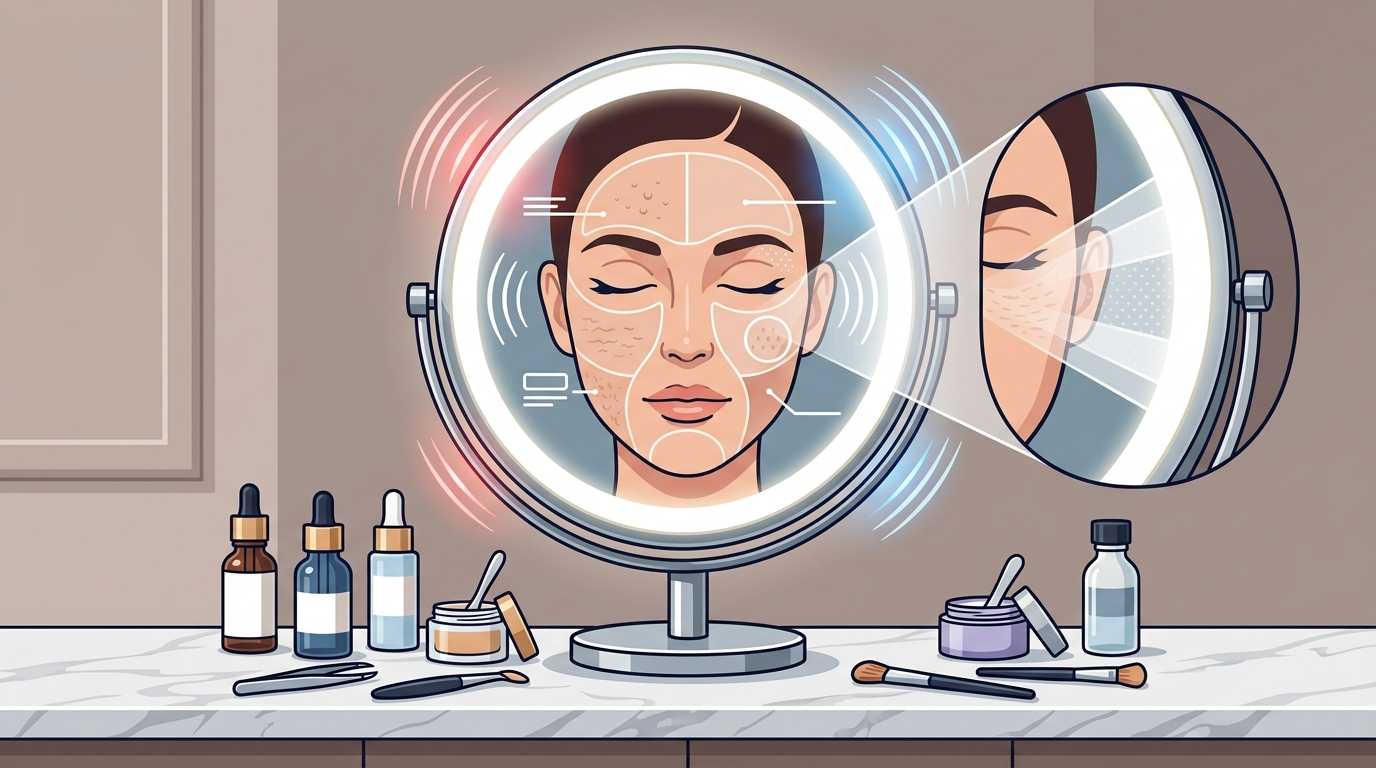
Light Emitting Diode (LED) therapy utilizes specific wavelengths of light to penetrate the skin at varying depths. Unlike ultraviolet light, LED therapy is non-thermal and does not damage the skin. LED therapy is a non-invasive treatment that uses specific wavelengths of light to stimulate cellular function. The two most common colors used in skincare mirrors are red and blue.
Red light, typically around 630 to 660 nanometers, penetrates deeper into the dermis. It is primarily used to boost collagen production, reduce inflammation, and accelerate healing. Blue light, usually around 415 nanometers, targets the surface of the skin. It is highly effective at killing acne-causing bacteria, specifically Propionibacterium acnes. By integrating these lights into a vanity mirror, users can perform daily treatments without the need for expensive clinical visits.
Many modern devices, such as those found in the Fancii product collection, offer adjustable intensity levels. This allows users to customize the treatment based on their skin sensitivity and specific concerns. The convenience of having this technology in a daily-use item ensures consistency, which is critical for seeing results in skincare routines.
Key Skincare Benefits
Integrating an LED mirror into your daily routine offers several distinct advantages over traditional lighting. The primary benefit is the accuracy of skin analysis. Standard bathroom bulbs often cast a yellow or blue tint, distorting the true color of the skin. This distortion can lead to improper product selection or missed signs of skin issues.
Enhanced Product Absorption
Using LED light before applying serums can enhance the absorption of active ingredients. The photobiomodulation effect of red light increases blood circulation and cellular energy production. This creates a more receptive environment for skincare products. When you apply your moisturizer or serum after a brief LED session, the skin is primed to absorb the nutrients more effectively.
Acne Management and Prevention
For those struggling with breakouts, blue light therapy is a game-changer. Blue light therapy is a targeted treatment that eliminates acne-causing bacteria on the skin's surface. By using a mirror with blue light settings, you can treat active breakouts and prevent new ones from forming. This is particularly useful for spot treatment, allowing you to focus the light on specific areas without exposing the entire face to high-intensity light.
Anti-Aging and Collagen Boost
As we age, collagen production naturally declines. Red light therapy stimulates fibroblasts, the cells responsible for producing collagen and elastin. Regular use of a red light mirror can help reduce the appearance of fine lines and wrinkles. It also improves skin elasticity and firmness. Many users report a noticeable "glow" after consistent use, which is attributed to improved circulation and reduced inflammation.
Choosing the Right Mirror
Not all LED mirrors are created equal. When selecting a device for skincare, consider the following factors:
- Light Modes: Ensure the mirror offers both red and blue light options. Some advanced models include green or yellow light for additional benefits like brightening or reducing redness.
- Intensity Settings: Adjustable intensity allows for gradual acclimation, especially for sensitive skin types.
- Magnification: A magnifying mirror is essential for detailed work, such as applying eye cream or treating individual blemishes.
- Power Source: Rechargeable models offer convenience and reduce clutter, while plug-in models provide continuous power for longer sessions.
Fancii offers a range of LED lighted mirrors designed to meet these criteria. Their products often include features like touch controls, battery life indicators, and high-quality glass that resists fogging. Reading product support guides can help you understand the specific care instructions for your device.
Product Comparison
The table below compares popular LED mirror features to help you make an informed decision.
| Feature | Compact LED Mirrors | Vanity LED Mirrors | Travel LED Mirrors |
|---|---|---|---|
| Primary Use | On-the-go touch-ups | Dedicated skincare routines | Portable treatment |
| Light Modes | Red, Blue, White | Red, Blue, Green, White | Red, Blue, White |
| Power Source | Rechargeable Battery | Plug-in or Battery | Rechargeable Battery |
| Magnification | 1x to 3x | 1x to 10x | 1x to 5x |
| Best For | Travelers | Home Spa Enthusiasts | Busy Professionals |
For those who prioritize portability, the best-selling compact mirrors offer a balance of power and size. For a more comprehensive home setup, a bundle deal might provide additional skincare tools to complement your LED routine.
Key Takeaways
- Red Light Therapy: Stimulates collagen production and reduces inflammation for anti-aging benefits.
- Blue Light Therapy: Targets and eliminates acne-causing bacteria on the skin's surface.
- Accuracy: LED mirrors provide true-color lighting, preventing misdiagnosis of skin conditions.
- Consistency: Daily use of LED therapy yields better results than occasional clinical treatments.
- Non-Invasive: LED therapy is safe for all skin types and does not cause thermal damage.
- Product Absorption: Pre-treatment with light can enhance the efficacy of topical skincare products.
- Warranty Support: Fancii provides a 24-month warranty on all products, ensuring long-term reliability.
Frequently Asked Questions
How long should I use an LED mirror for skincare?
Most dermatologists recommend using LED light therapy for 10 to 15 minutes per session. Consistency is more important than duration, so daily use is ideal for seeing results.
Can I use an LED mirror if I have sensitive skin?
Yes, LED therapy is generally safe for sensitive skin. Start with lower intensity settings and shorter sessions to allow your skin to acclimate. Always follow the product instructions for your specific device.
Do LED mirrors replace professional dermatological treatments?
No, LED mirrors are a complementary tool for daily maintenance. They are not a substitute for professional medical advice or clinical-grade treatments for severe skin conditions.
What is the difference between red and blue light?
Red light penetrates deeper to boost collagen and heal skin, while blue light targets the surface to kill acne bacteria. Using both provides comprehensive skincare benefits.
How do I clean my LED mirror?
Use a soft, dry cloth to clean the surface. Avoid spraying liquids directly onto the mirror. Refer to the support documentation for detailed cleaning guidelines.
Are LED mirrors safe for eyes?
While LED light is generally safe, it is recommended to keep your eyes closed during treatment or use protective goggles. Direct exposure to high-intensity light can be uncomfortable.
Can I use makeup with an LED mirror?
Yes, many LED mirrors are designed for makeup application as well. The true-color lighting ensures that your makeup matches your skin tone accurately.
Start Your Skincare Journey
Transform your daily routine with the power of light therapy. Explore the full range of LED mirrors and skincare tools at Fancii. With free shipping on orders over $90 and a 30-day hassle-free return policy, you can invest in your skin with confidence. Shop now to discover the perfect mirror for your skincare needs.